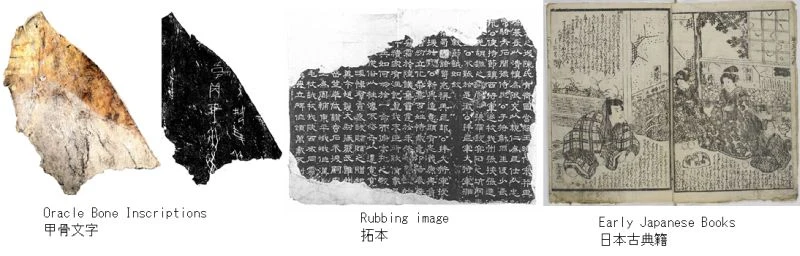
Oracle Bone Inscription Recognition
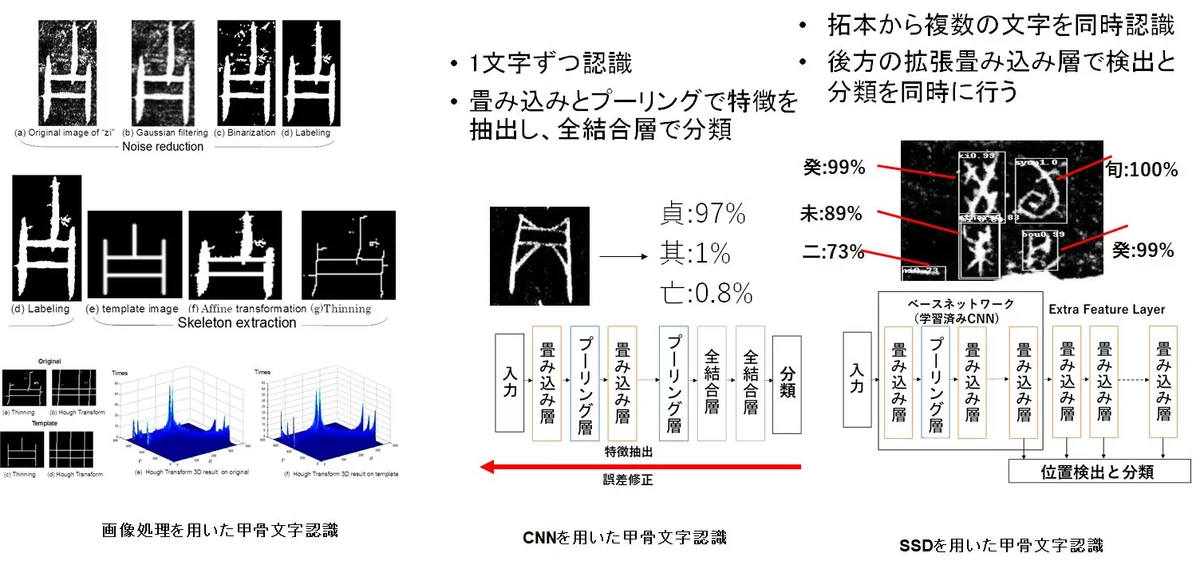
Oracle bone inscriptions are ancient Chinese characters from the Yin dynasty, difficult to recognize automatically due to their variety of forms and age-related degradation. We combine image processing and deep learning to detect, classify, and organize these characters, supporting the digitization and study of oracle bone materials.
Cursive Japanese (Kuzushiji) Recognition
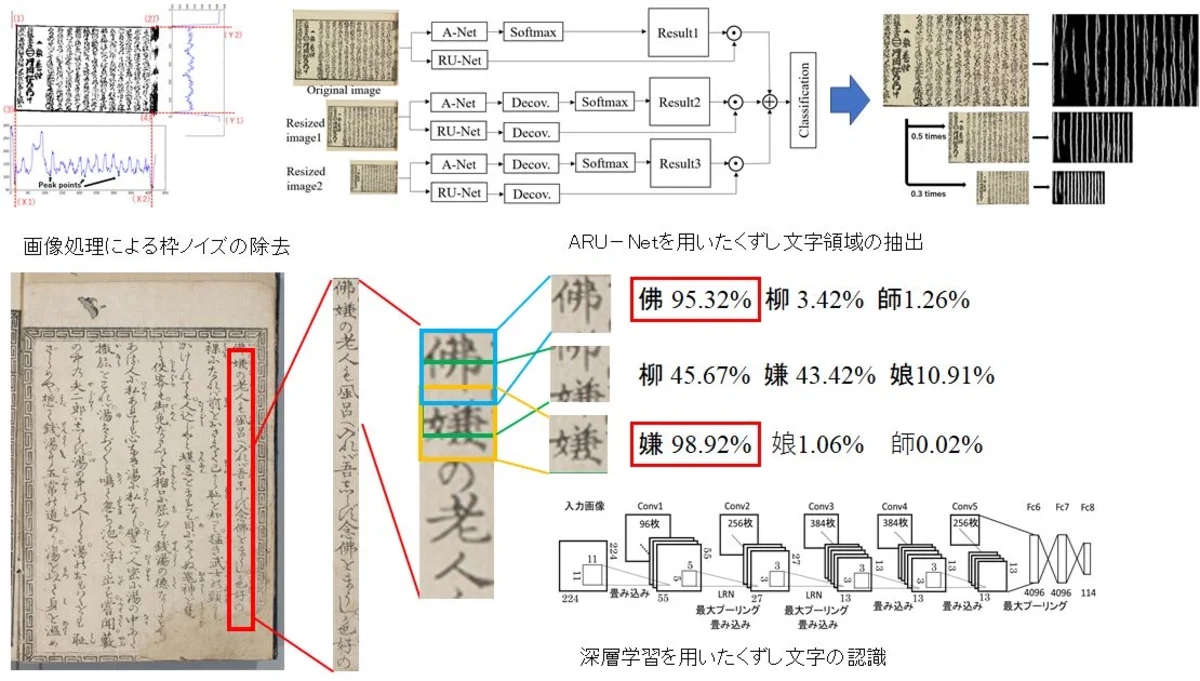
Most classical Japanese books are written in cursive kuzushiji script, where connected characters and shifting forms make automatic reading difficult. We combine character-candidate extraction, character recognition, and document structure analysis to support reading and streamline the organization of classical books.
Restoration of Historical Document Images
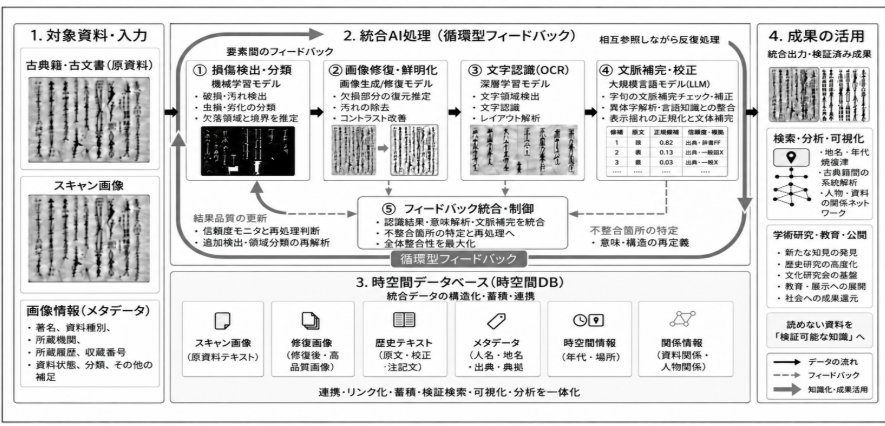
Ancient documents and classical books suffer from degradation, stains, fading, and low contrast, all of which reduce readability. We use image restoration technologies including GANs and diffusion models to improve visibility while preserving textual information, supporting the preservation and use of historical materials.
Document Understanding & Knowledge Extraction
Beyond character recognition, we extract vocabulary, themes, and chronological information from materials to build semantic understanding of documents. This supports systematizing historical materials, improving searchability, and enabling knowledge discovery, opening new possibilities for cultural heritage research.
Anywhere, Anytime Recognition of Ancient Documents
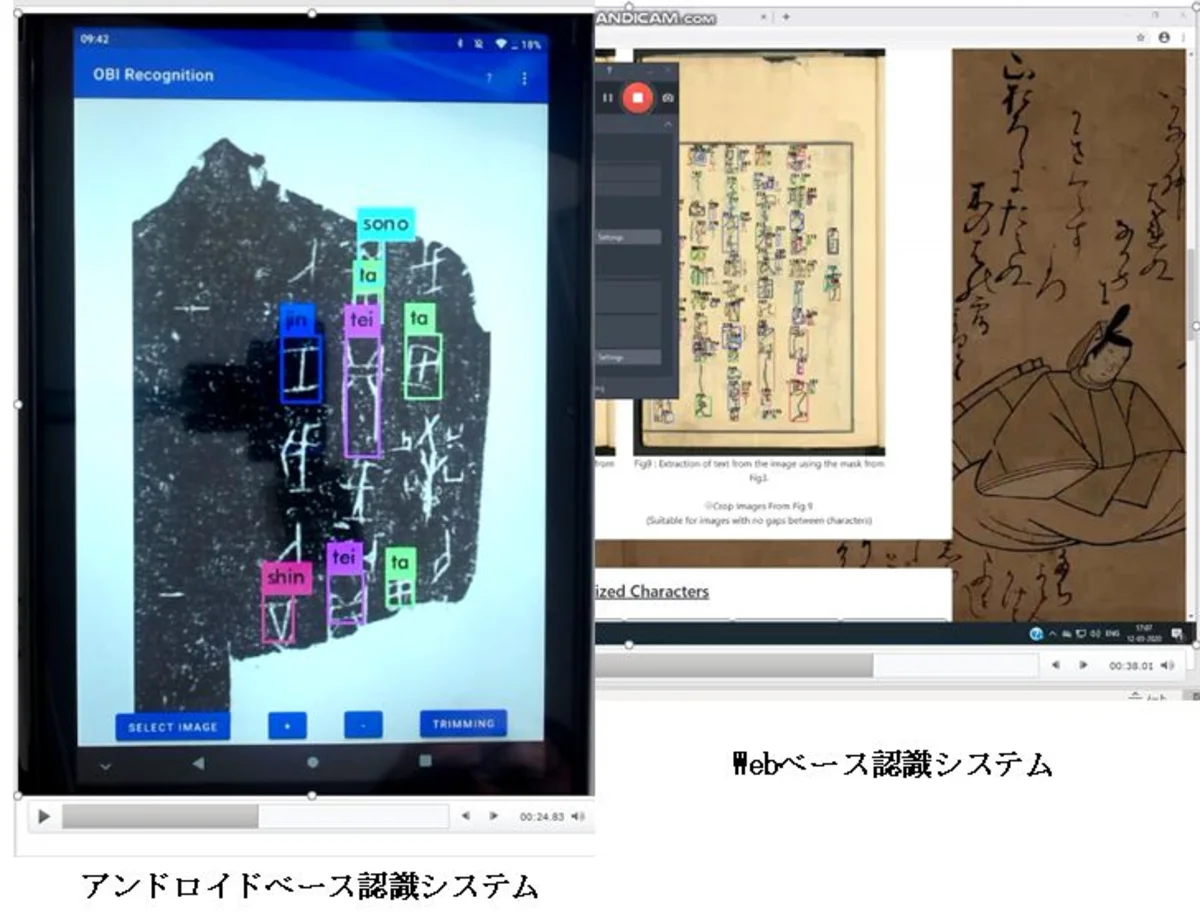
Being able to recognize documents anywhere, anytime is an important way to make classical books easier to organize. We build a deep-learning recognition model on a server, combining a web-based system that transfers document images over the web for recognition with an Android-based system that runs on tablets and similar devices. Web-based recognition system ↗